Setup
Define the source boundary, ingest the supplied assets and establish what the analysis can inspect.
Deterministic boundary
Application & data modernization
modernAIze reconstructs supported legacy applications and data systems into a semantic model your team can inspect. It records the approved target design, generates the target project and keeps the result connected to the available evidence.
Source-to-target contract
A governed path
The work moves through four connected stages. Automation builds and tests the model; the people responsible for the system review its meaning and approve the target before generation.
Define the source boundary, ingest the supplied assets and establish what the analysis can inspect.
Deterministic boundaryMove from system briefing to regions and exact source-backed detail, with confidence and missing knowledge visible.
Team reviewCompare target structures, apply the relevant blueprint and approve the intended architecture.
Team approvalGenerate the target project and inspect its files, execution record and available quality evidence.
Reviewable outputNorthstar University
This synthetic Qlik estate follows the same project through Setup, three levels of understanding, an approved target architecture and the resulting dbt project. Move through the pages to see how the available source becomes a reviewable target.
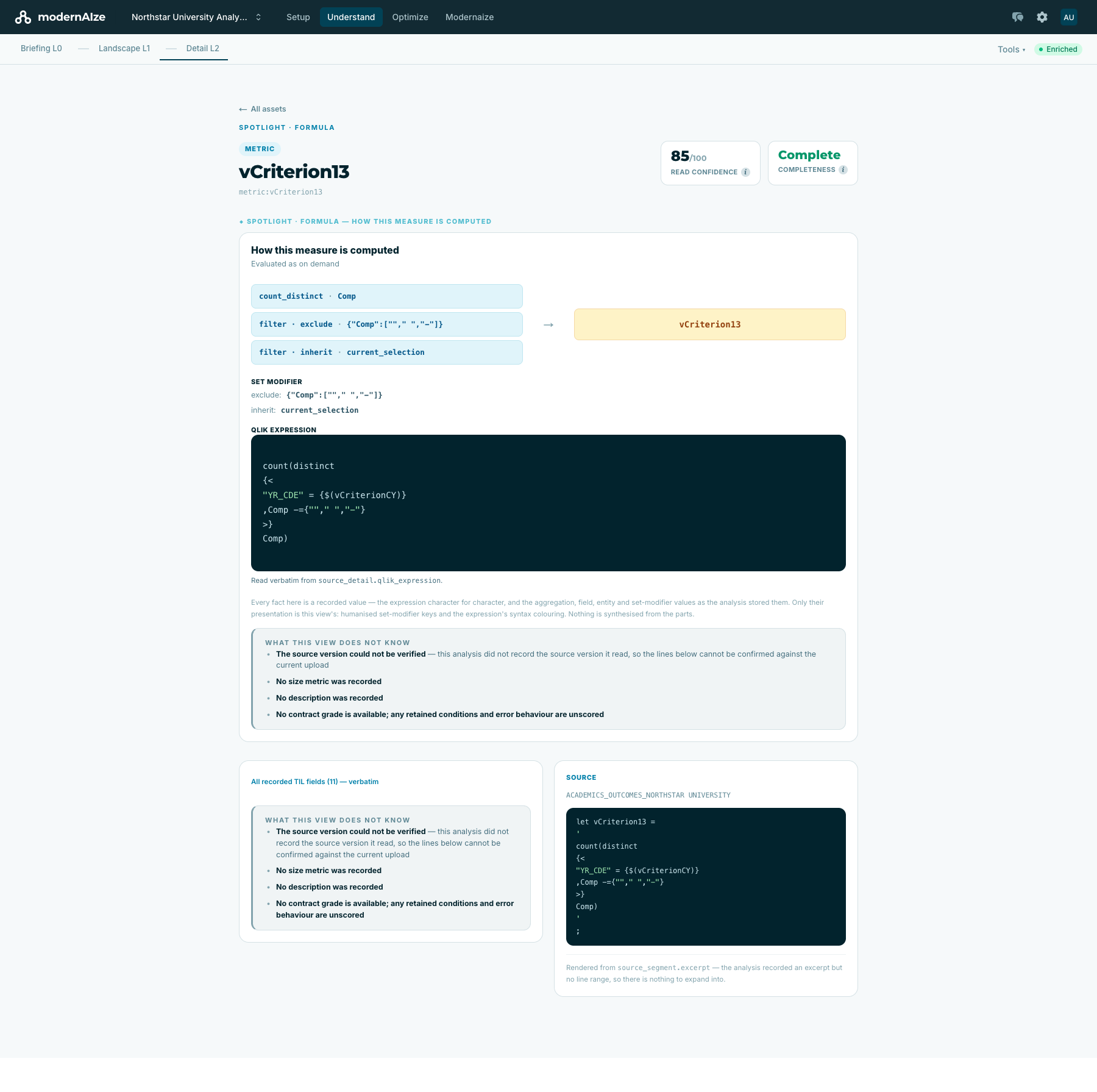
Northstar begins with two supplied Qlik scripts. Setup records the source platform, the files received and their readiness for analysis.
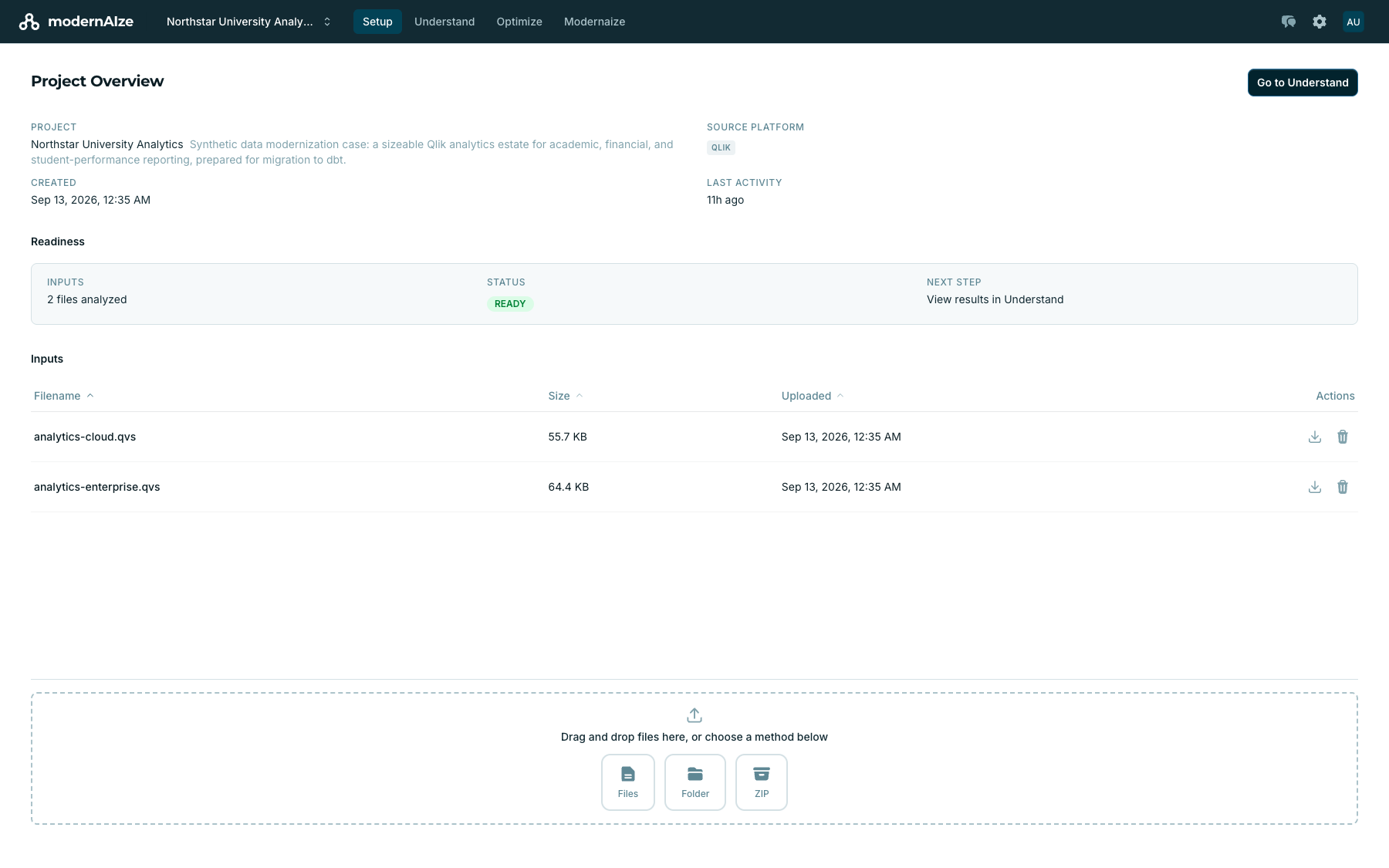
The first view gives the project a business context and reduces the source into a readable flow from inputs through transformations to reporting targets.
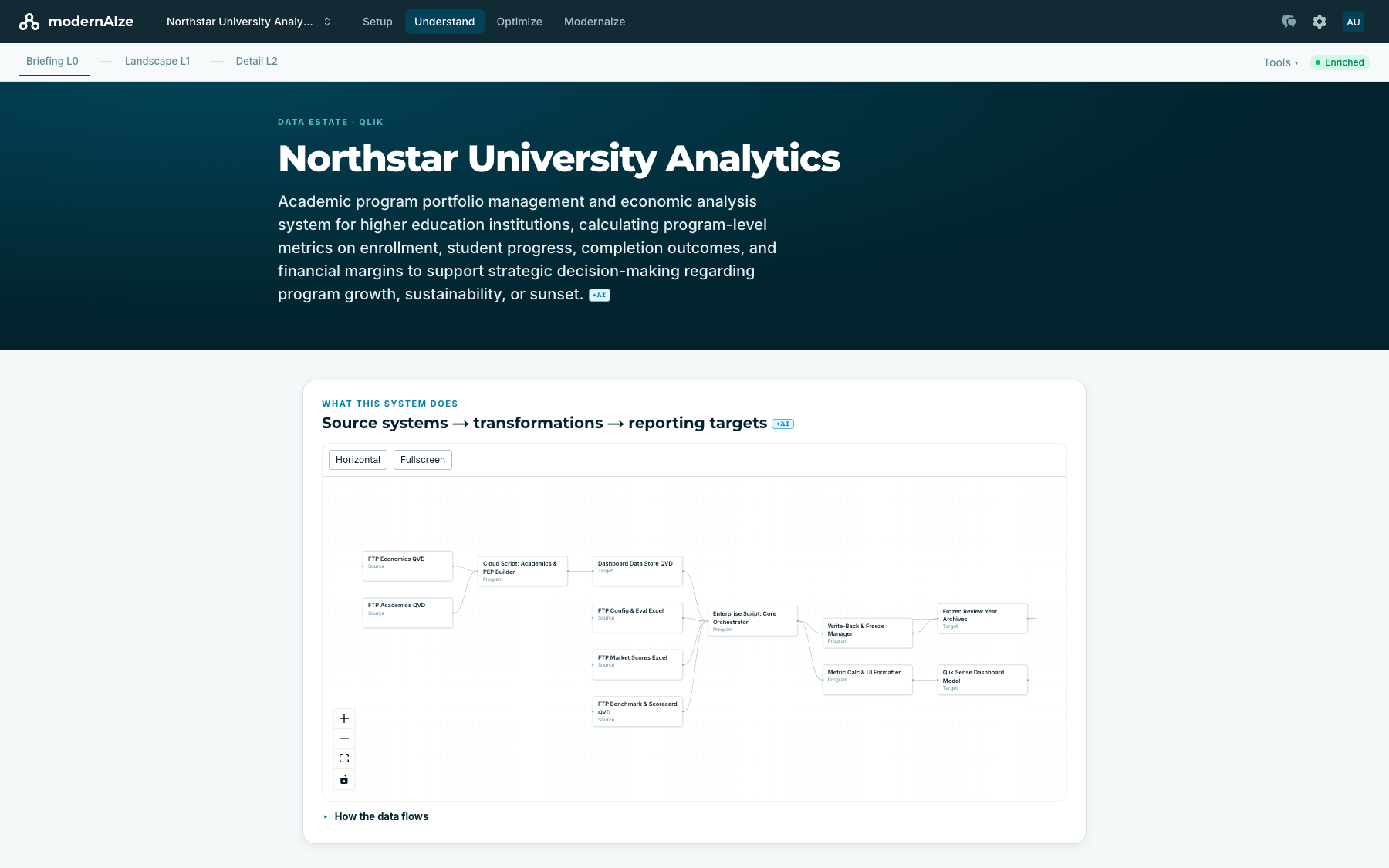
The region landscape groups the reconstructed estate and compares areas by size, complexity and available evidence before anyone chooses where to investigate.
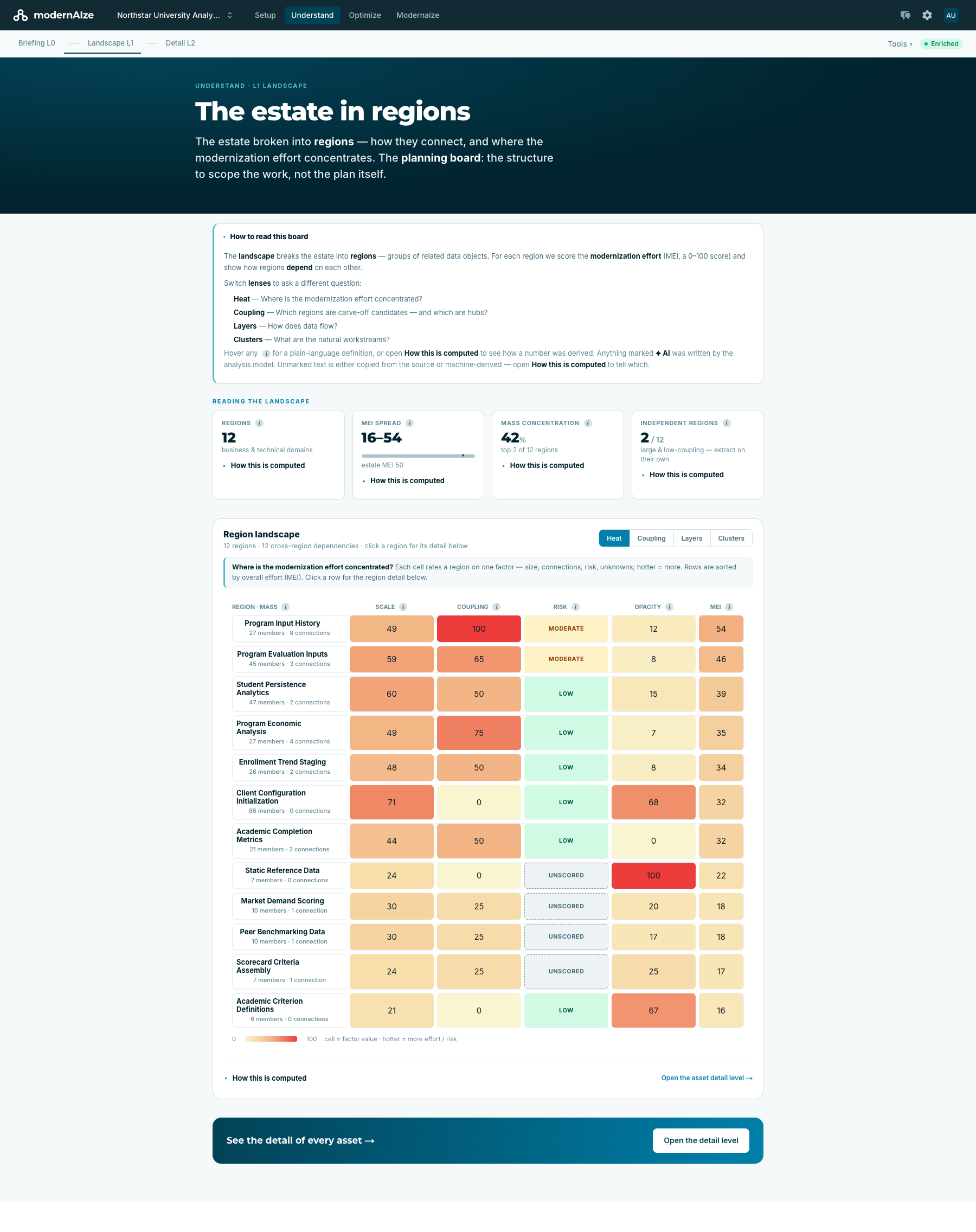
The detailed view connects a recorded metric to its formula, dependencies and source evidence so that the interpretation can be checked.
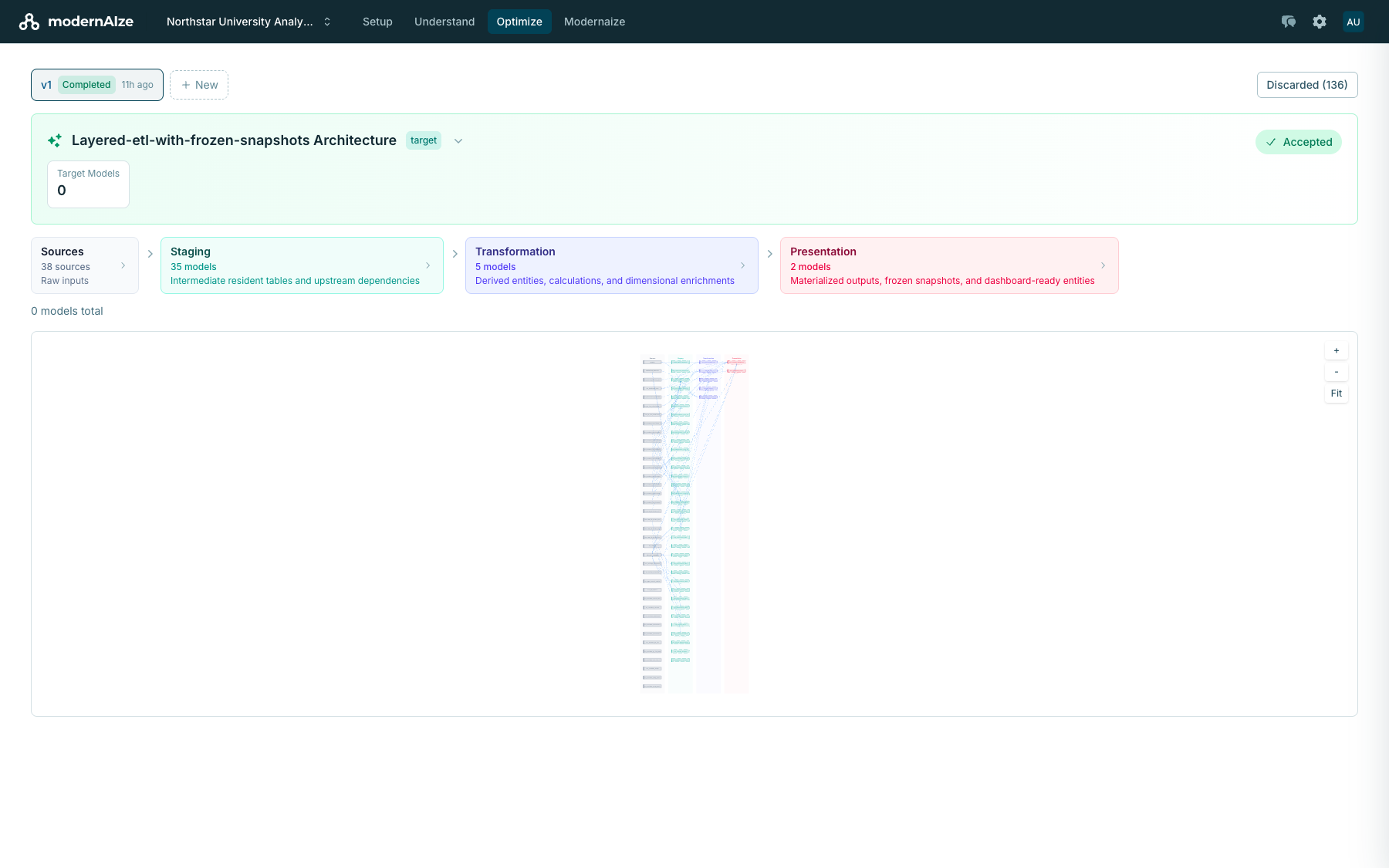
The accepted proposal organizes the source into staging, transformation and presentation layers, with frozen snapshots retained for the target workflow.
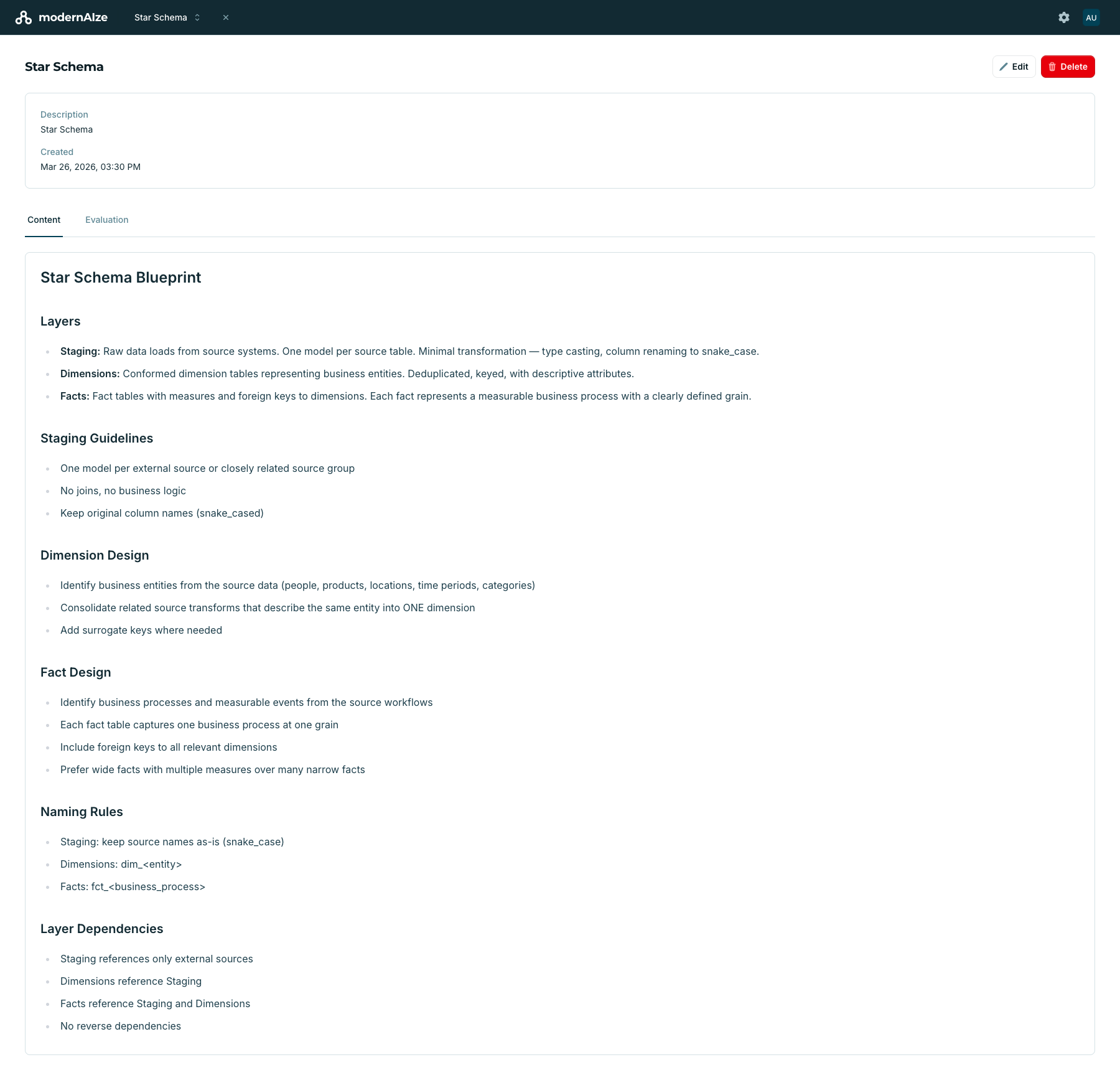
The Star Schema blueprint records reusable rules for staging, dimensions, facts, naming and layer dependencies before output is produced.
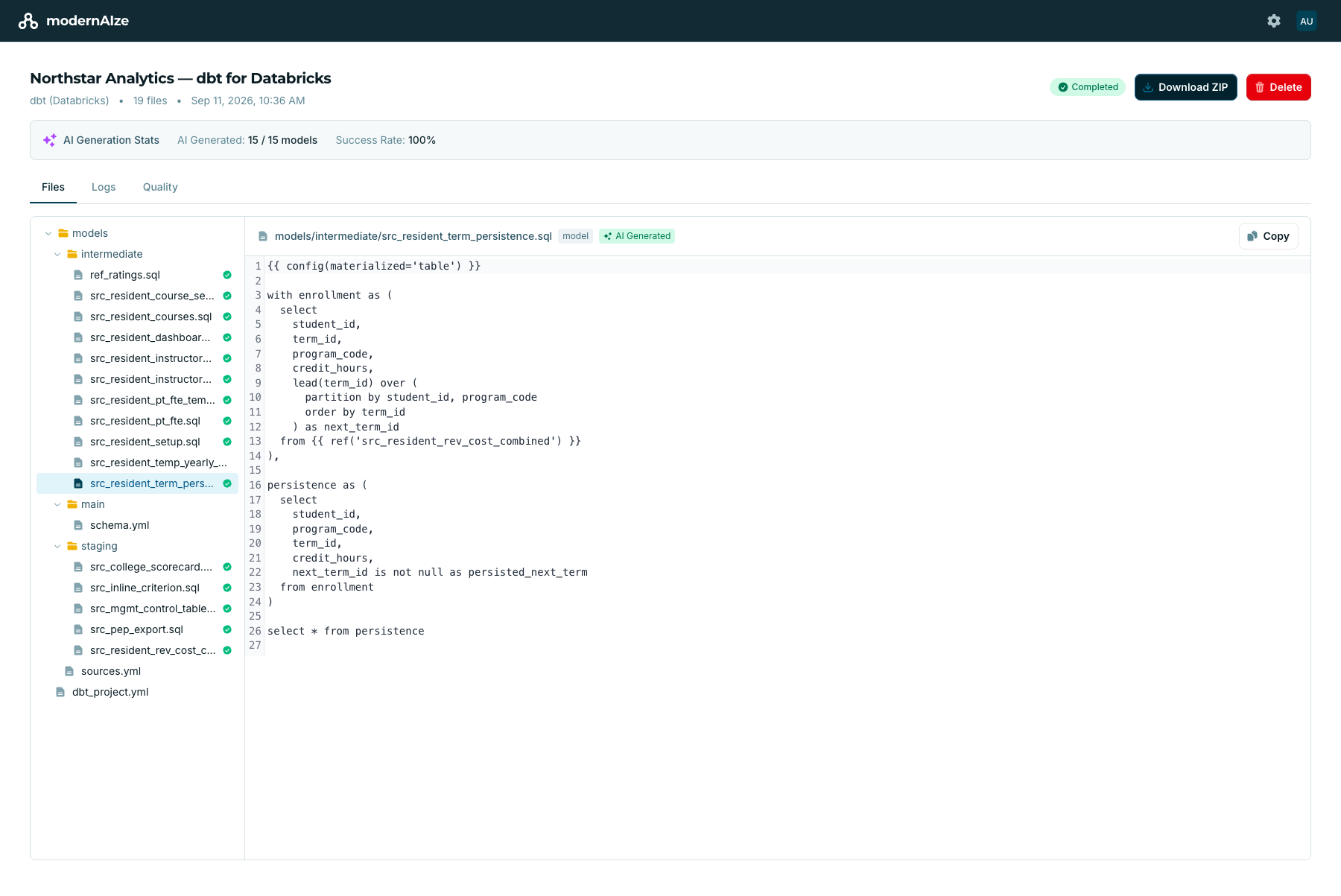
The result is a 19-file dbt project. Its model tree and SQL remain visible together, allowing engineers to review the generated structure and implementation.
Technology
modernAIze separates source evidence from inference, gives model work bounded context and keeps the path to generated output inspectable. Eight technical components make that possible.
Grammar, schema and audit-export parsers reconstruct what the supplied source exposes and validate it without an LLM.
A versioned, JSON-validated semantic model separates source connectors from target adapters and connects every stage.
Each task receives a bounded projection of the semantic graph: the constructs it needs, with a closed vocabulary.
The estate is planned, clustered and divided among typed workers, then merged through schema validation and precedence rules.
Every model call is routed, metered, costed and policy-controlled, including calls to configured private or local providers.
Versioned blueprints express target conventions; adapters apply them through target-specific generation and quality rules.
Constructs retain their origin, confidence and transformation history so extracted fact remains distinct from inference.
Runs trace stages, shards, workers and model calls with their timing, prompt version and attributed cost in one record.
Practical scope
Coverage is assessed for the connector, target adapter and supplied system. The catalogue below shows the currently supported source and target technologies; the exact path and acceptance criteria are established during scoping.
Discuss your systemSource connectors
 COBOL
COBOL webMethodsDataStage
 SAP BW
 PowerCenter
 Teradata
 Qlik
Qlik SAS
SASTarget catalogue
 Java / Spring
 dbt
dbt Snowflake
 BigQuery
 Databricks
 Redshift
 Oracle
 PostgreSQL
 MySQL
MySQL SQL Server
 Generic JDBC
Start with evidence
Bring one representative application or data system, or a sanitized export. We can begin by checking the source boundary, the intended target and the evidence needed to continue.
Contact Trazadera