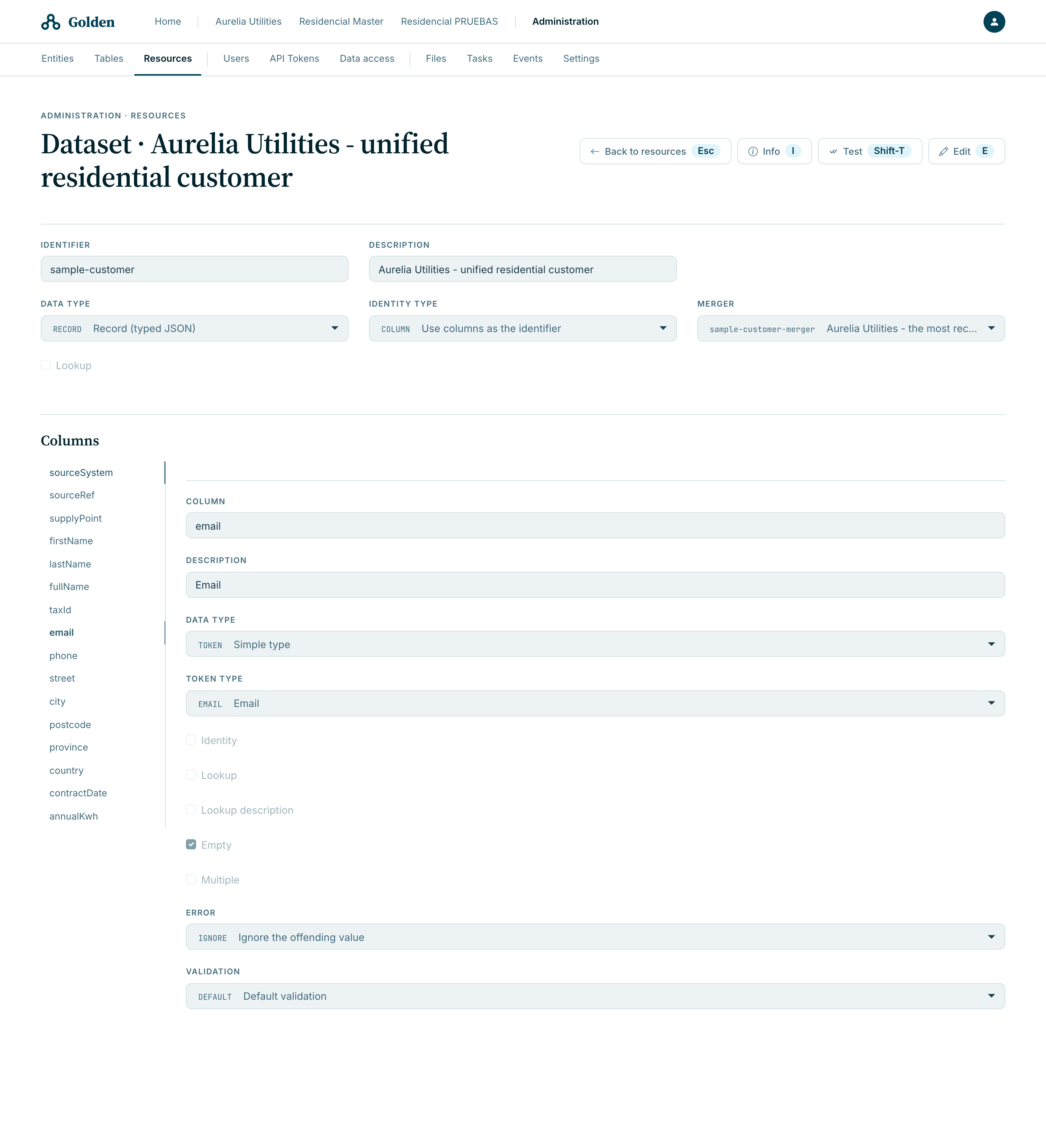
Use the meaning of the field.
An email is more than a text string. Declaring its type and enabling default validation lets Golden flag values that do not meet that format.
 Enlarge
The records your business shares
A supplier, a product, a property or a destination is reused across the business. When each system maintains its own version, teams spend time reconciling codes, correcting fields and questioning which record to trust.
01 / Shared entities
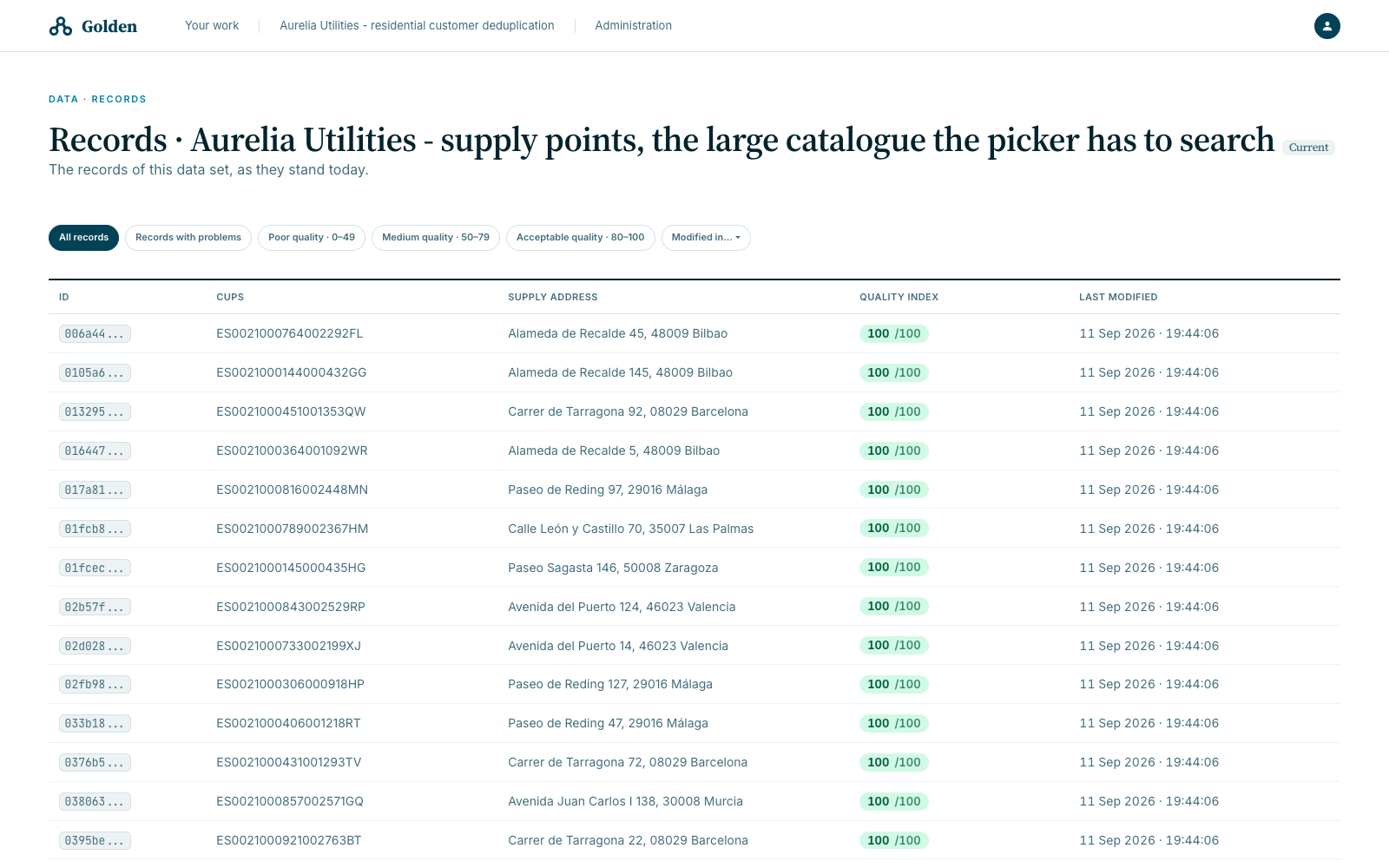
A renamed destination splits a report. An outdated supplier address travels into the next order. A missing property reference breaks a relationship. Trazadera Golden gives each master domain a defined structure, explicit relationships and a place to maintain its records.
 Enlarge
02 / Entity quality
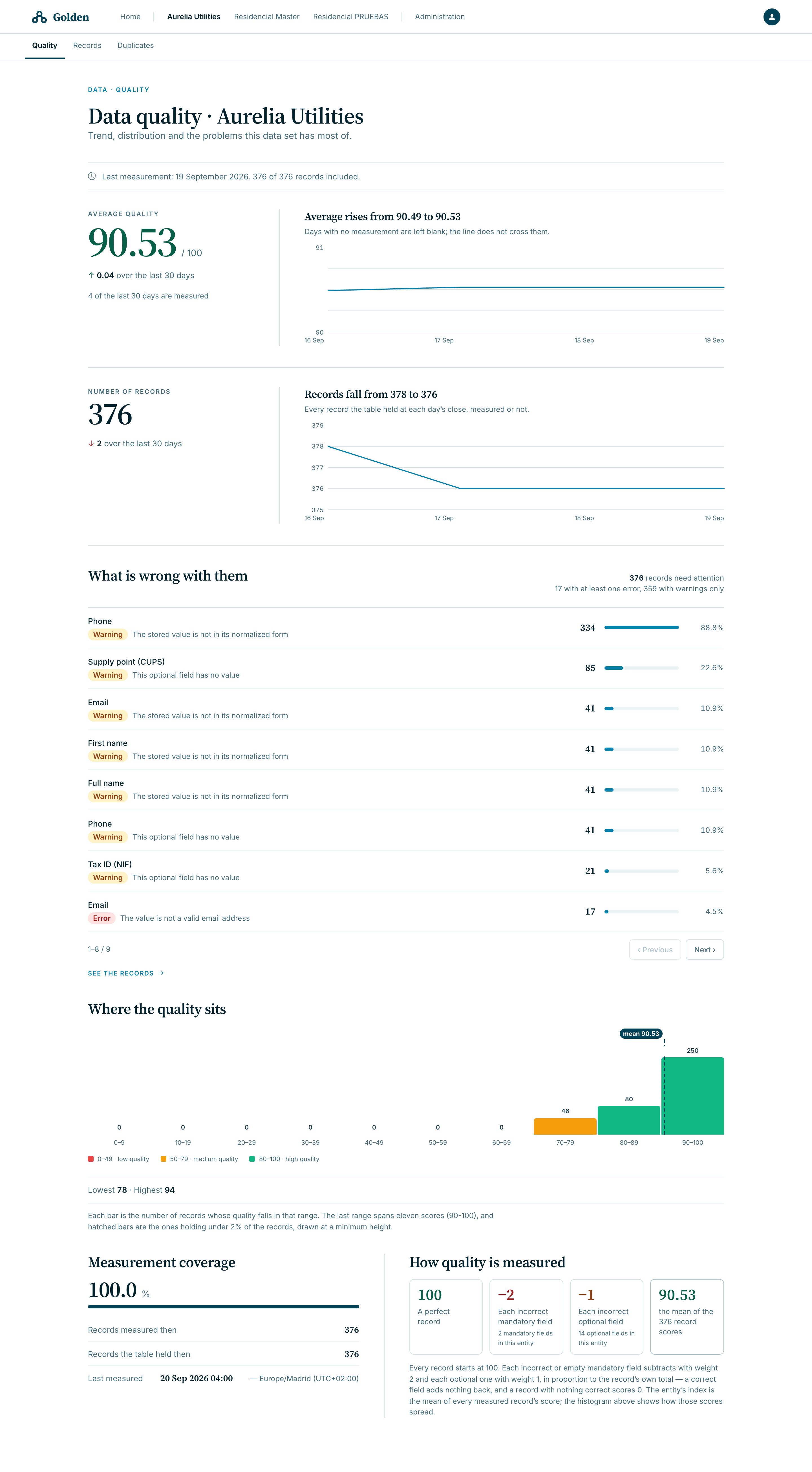
Keeping a master table is not enough. Check the quality of its records, the coverage of the measurement and the fields that repeatedly fail. This customer entity illustrates the same quality controls available to other master domains.
Average quality in this demonstration.
Among 376 measured records, an apparently strong average coexists with invalid email addresses.
 EnlargeEnlarge
03 / Record maintenance
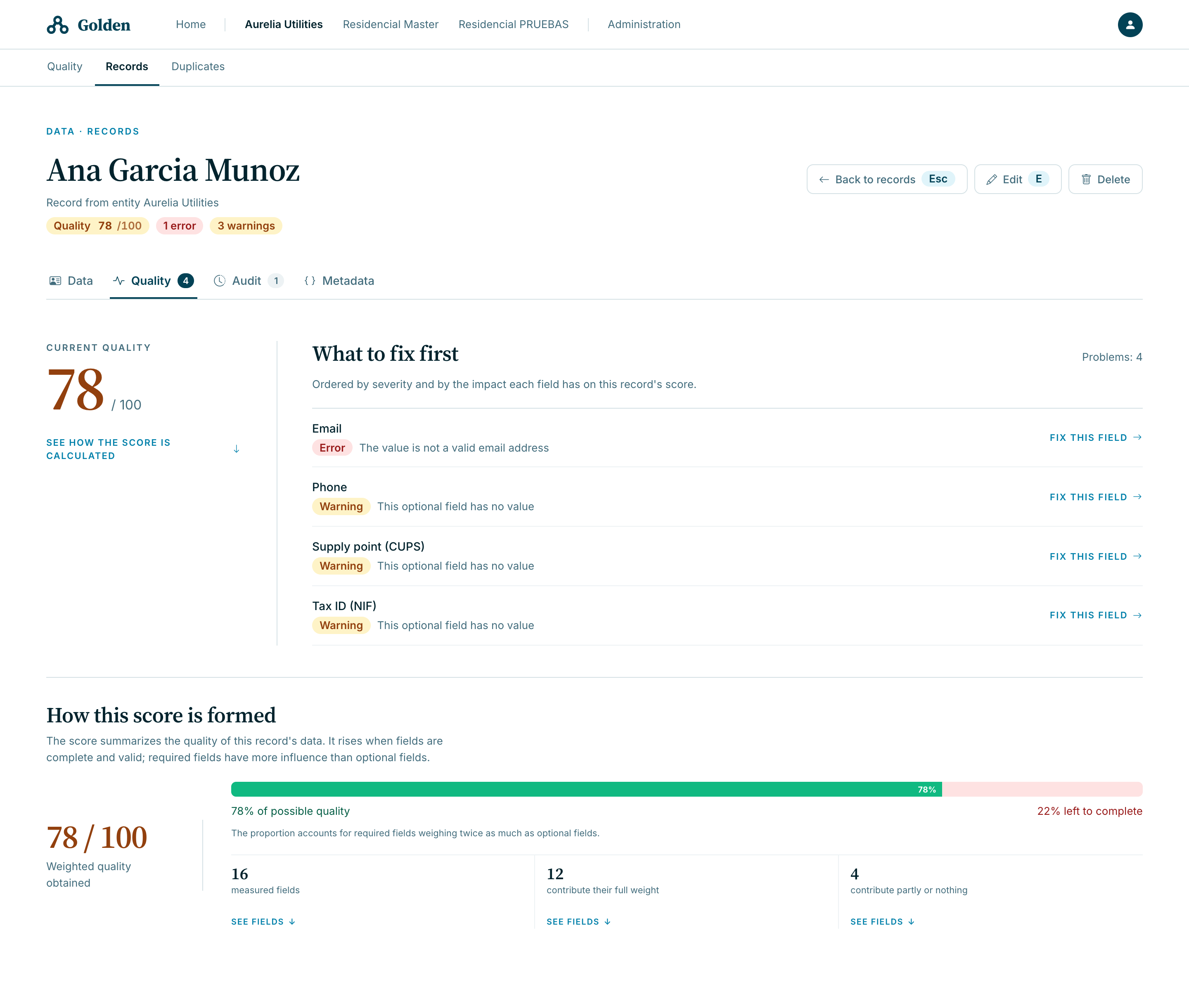
Open a master record and see what needs attention. Golden identifies the field, explains what failed and separates errors from warnings. The responsible team can make a specific correction against the agreed rules.
 Enlarge
An error needs a concrete correction.Verify the email against a reliable source before replacing it.
A warning needs a business decision.A missing optional field may be acceptable for one use and important for another.
Enlarge04 / The shared rules
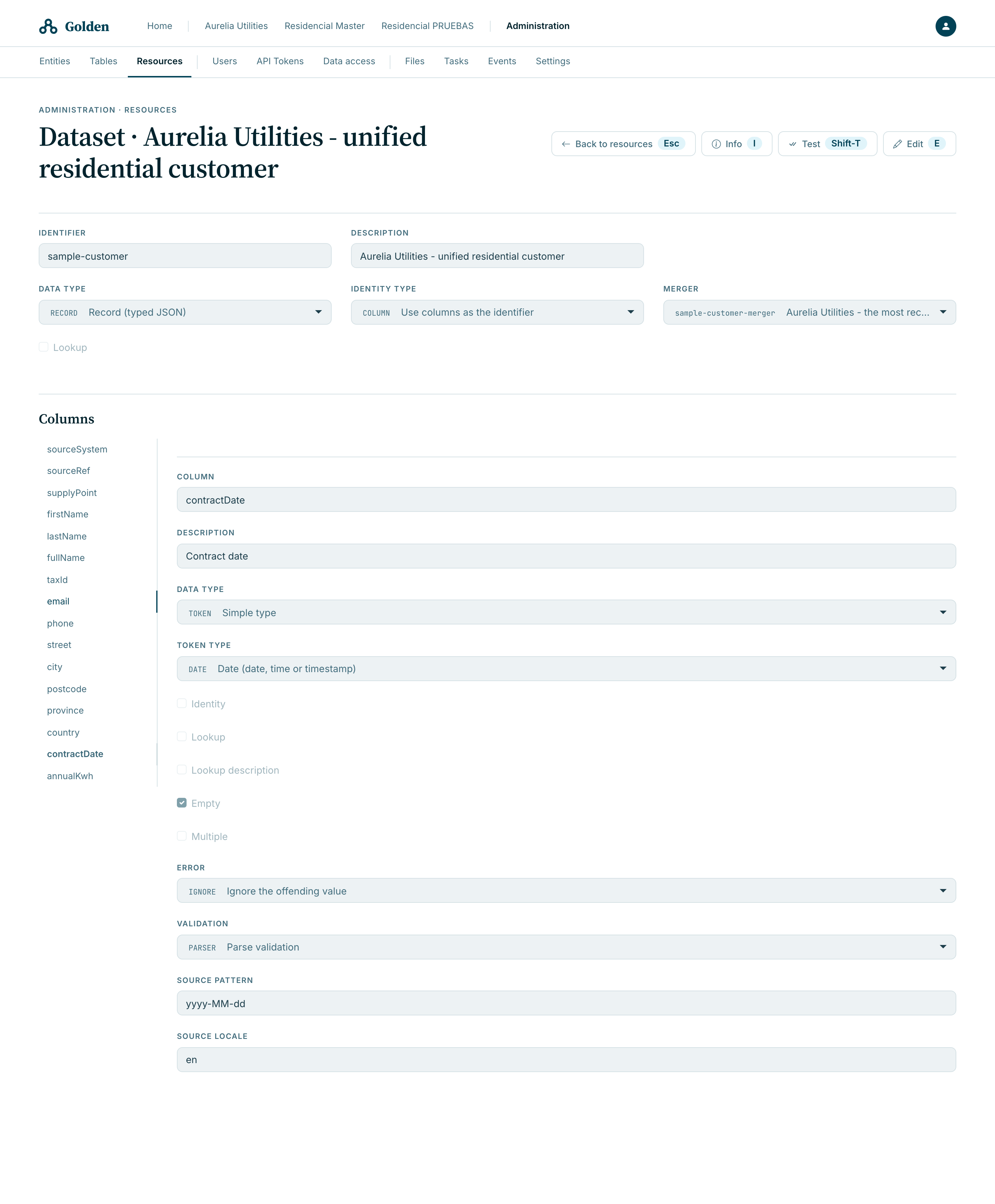
The dataset defines the fields, types and relationships of the master record. Decide which information is required, use built-in validation for standard types and add the formats or custom checks the domain needs.
An email is more than a text string. Declaring its type and enabling default validation lets Golden flag values that do not meet that format.
EnlargeSpecify an expected date format or a regular expression. For checks that need custom logic, a script can define the validation.
 Enlarge
05 / Keep it governed
Keep the record useful as sources change and new systems start using it. Define the people who maintain it, preserve the history of their changes and agree where the governed data should be published.
Agree who is responsible for each domain and configure who can read or change its records. Corrections need an accountable team.
Use record history and audit to understand what changed and why. Monitor recurring quality findings to catch problems that keep arriving from a source.
Configure the destinations and transformations that consuming systems need. Publication is part of the domain setup, with an explicit scope.
EnlargeWhen quality rules change, some records need remeasurement. Golden identifies pending scores and separates trends across changed definitions.
EnlargeStart with one entity
Choose one master domain, its source systems and the teams that consume it. We can define its structure, ownership, quality rules and publication scope.
Discuss your master data